Discover the top-rated AI advertising platforms. We ranked the 25 best tools, comparing Madgicx, Jasper, and others on features, pricing, and performance.
The top-rated AI advertising platforms are Madgicx, Jasper.ai, and AdCreative.ai, each excelling in different areas from AI-assisted campaign management to AI-powered content and creative generation. The best platform for you ultimately depends on your specific business model, primary advertising channels, and how much you want to reduce manual campaign work.
If you feel like you're drowning in a sea of AI tools, you're not alone. According to data compiled by Averi AI, the AI in marketing market has exploded to a value of over $47.32 billion, and it feels like a new "game-changing" app launches every Tuesday. And every launch comes with a fresh wave of FOMO, right?
It's no surprise that a staggering 88% of marketers now use AI tools in their daily workflow. Choosing the right one isn't just a nice-to-have anymore; it's critical for staying competitive.
So, we did the hard work for you. This guide is our transparent, data-backed review of the 25 best platforms on the market — expanded from our original 15 to cover enterprise and programmatic platforms we hadn't included before. We've got verified pricing info, specific use cases, and a no-fluff breakdown to help you find the right AI co-pilot for your brand.
Madgicx is a leading AI-first platform that combines 24/7 AI-powered ad optimization with powerful AI creative tools, built specifically to scale e-commerce brands on Meta. Get instant campaign diagnostics and launch high-potential ads faster.
How We Evaluated the Top AI Advertising Platforms
Before we dive in, let's pull back the curtain on how we got here. We didn't just throw a bunch of logos on a page. We developed a scoring framework to rate each platform objectively because we know you need real answers, not just affiliate links.
Our Scoring Framework (100-point scale):
- Core Functionality (30%): How well does it actually do the thing it promises? We tested the primary AI feature, whether that's campaign optimization, creative generation, or copy output. This is weighted highest because it's where the biggest gap shows up between platforms: some only surface recommendations you approve manually (Adzooma, WordStream), while others execute autonomously on a schedule (Madgicx's AI Marketer, Optmyzr's rule-based automations). Neither approach is automatically better — but we scored each platform against what it claims to do, not a generic bar, so a recommendation-only tool isn't penalized for not being autonomous if that was never the pitch.
- E-commerce Suitability (20%): Is this built for brands that sell products online? We looked for deep e-commerce integrations (like Shopify), catalog ad support, and a focus on metrics that matter, like ROAS and LTV — not vanity metrics like impressions or reach that look good in a screenshot but don't tell you if you made money.
- Integration & Ease of Use (20%): How nicely does it play with your existing tech stack? We assessed the learning curve, the time it takes to get set up, and the quality of its integrations with platforms like Meta, Google, and TikTok. Where a free trial or live demo was available, we timed the actual setup process and noted whether it required a developer or could be handled entirely by a marketer — a real difference between, say, a self-serve tool you can be running in minutes and an enterprise platform that needs an onboarding team.
- Pricing & Transparency (15%): Is it worth the money? We evaluated the value you get for the price, the clarity of the pricing tiers, and the total cost of ownership beyond the monthly fee. This category also penalized platforms that hide pricing behind a "book a demo" wall with no published rates — AdRoll and Adzooma publish real numbers upfront; enterprise platforms like Smartly.io and Skai require a sales conversation before you learn what you'll actually pay, which is a legitimate trade-off but one buyers should walk in expecting.
- Innovation & Support (15%): Is this tool ready for the future? We looked for future-ready features like AI agents and multimodal generation — tools that proactively surface an insight before you ask, not just ones that answer when prompted — plus the quality and responsiveness of their customer support, since even the smartest AI is only as useful as how quickly you can get help when it breaks.
AI Advertising Platforms: Comparison Table
Here's a quick look at how the top platforms stack up.
Best AI Advertising Platforms by Category
Feeling overwhelmed? We get it. Let's break it down. Here are our top picks based on what you're trying to achieve.
- Best for AI-Powered Campaign Optimization: Madgicx, Albert.ai, Pixis, Motion, Adzooma, WordStream, Optmyzr
- Best for AI Ad Creative & Video: AdCreative.ai, Pencil, Creatify, Celtra
- Best for AI Ad Copy & Content: Jasper.ai, Copy.ai, Surfer SEO, Writer, Anyword, Semrush
- Best for Social Media Management & Analytics: Sprout Social, Hootsuite, Brand24
- Best for Programmatic & Enterprise Advertising: Smartly.io, Skai, StackAdapt, AdRoll, Quantcast
Detailed Reviews of the Top 25 AI Advertising Platforms
Alright, let's get into the nitty-gritty. Here's our detailed breakdown of each tool, what it does best, and who it's for.
Category: AI-Powered Campaign Optimization
An AI advertising platform is a software solution that uses artificial intelligence and machine learning to automate, analyze, and optimize advertising campaigns across various digital channels. Think of these tools as the brains of your marketing operation.
1. Madgicx – Best Overall for E-commerce Scaling
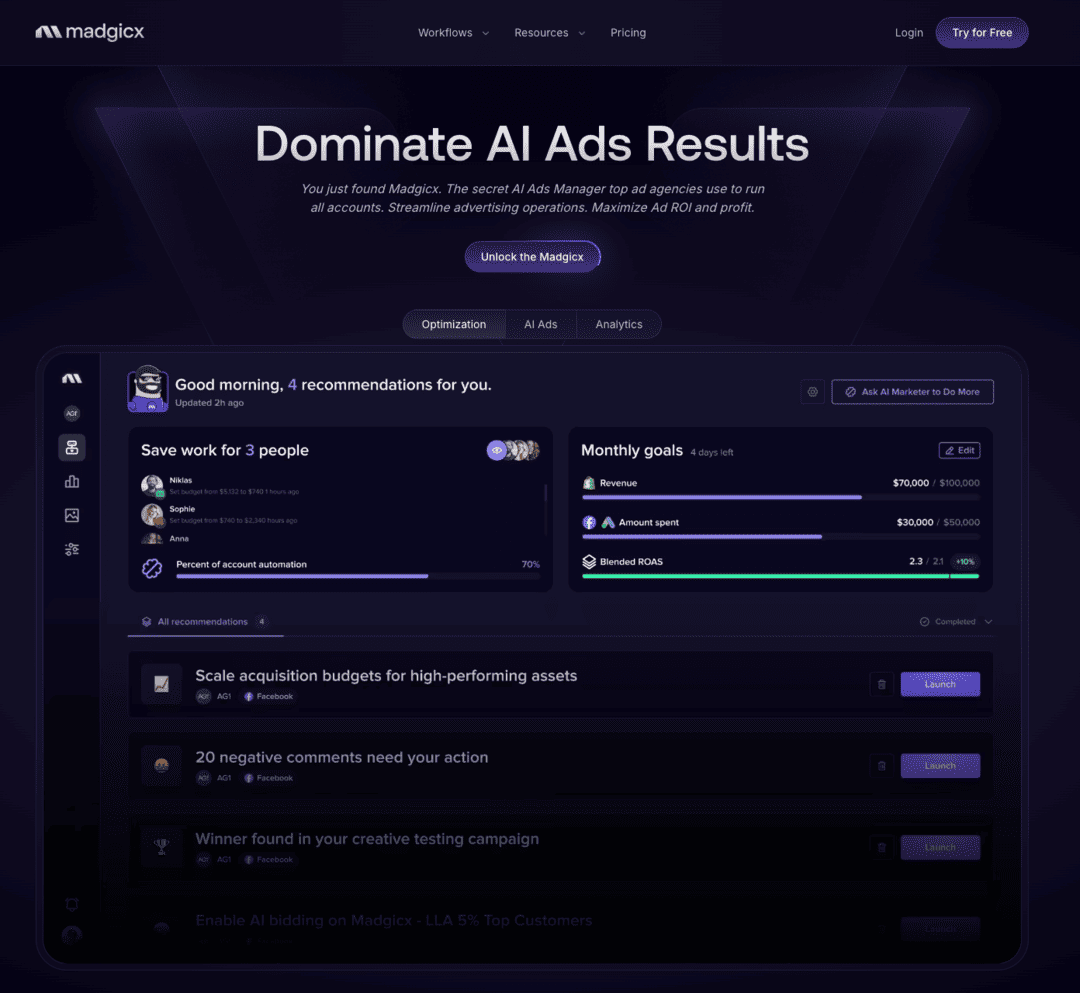
Okay, full disclosure: this is our baby. But Madgicx is our top-rated platform for e-commerce because we built it to solve the exact problems we faced as marketers. It's a comprehensive platform that integrates an AI-first approach to campaign management with deeply integrated AI creative tools.
While other platforms solve one piece of the puzzle (like just creative or just analytics), Madgicx is a powerful growth platform designed to handle the entire workflow for e-commerce brands. Its real strength is the synergy between its tools. You can diagnose a problem with Madgcix MCP right from your Claude chat, get an optimization plan from the AI Marketer, and then generate the exact creatives you need with the AI Ad Generator—all in one place.
Key E-commerce Features:
- AI Marketer that performs daily account audits and provides one-click optimization recommendations
- Madgicx MCP for Claude lets you connect to your Meta ad account for live insights, then execute optimizations from your conversation
- AI Ad Generator creaties high-converting image ads in seconds
- Cross-platform reporting with One-Click Report for Facebook, Instagram, Shopify, Google, and TikTok
- Real-time budget optimization based on performance data
Best For: DTC e-commerce brands spending $1k+ per month on Meta ads and that want to automate optimization, scale creative production, and make smarter decisions, faster.
2. Albert.ai – Best for Enterprise Cross-Channel Budgets
Albert.ai is a heavyweight in the enterprise AI space. Think of it as the marketing team's bazooka. It's a highly automated platform that connects to your search, social, and programmatic channels, then manages and optimizes your budget across all of them in real-time. In a famous case study, Harley-Davidson used Albert to achieve a mind-blowing 2,930% increase in leads, according to Marketer Milk.
Best For: Large enterprises with multi-million dollar ad budgets who need to optimize a complex, cross-channel media mix and are ready to hand the reins over to a high degree of AI automation.
3. Pixis – Best for Codeless AI Infrastructure
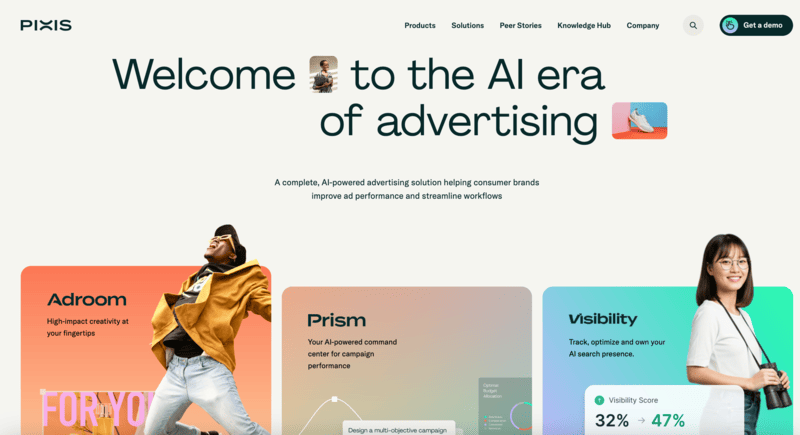
Pixis takes a unique approach. Instead of offering a single solution, it provides a "codeless AI infrastructure" that allows marketing teams to build their own AI models and workflows—without needing a data scientist. It's powerful and flexible, targeting mid-to-large market teams who want more control over their AI destiny.
Best For: Tech-savvy marketing teams at mid-to-large companies that want to build custom AI solutions without writing a single line of code.
4. Motion – Best for Creative Analytics & Competitive Intelligence
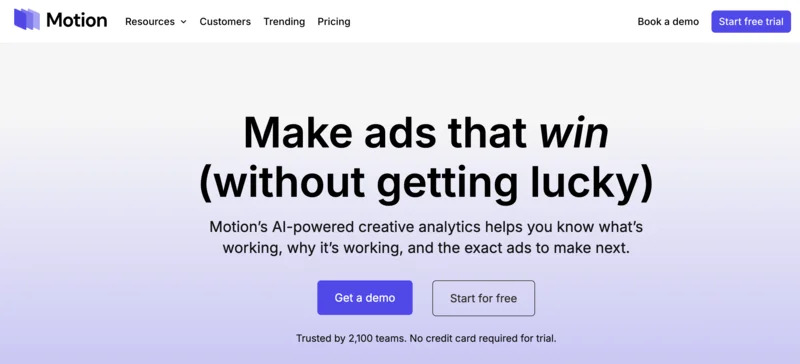
Motion auto-analyzes your ad creative frame-by-frame to find patterns across messaging, visuals, hooks, and audience targeting — its AI Tagging reveals which specific visuals or angles are actually driving performance, not just which ad won. Its Inspo feature also monitors competitor ads through public ad libraries and generates AI summaries of their testing strategy and positioning gaps. Motion customers collectively analyze over $14 billion in media spend annually, across Meta, TikTok, YouTube, and LinkedIn (Meta gets the deepest feature support).
Best For: Performance marketers who want to understand why their creative is working, not just automate what to do about it.
5. Adzooma – Best Free Entry Point for PPC Automation
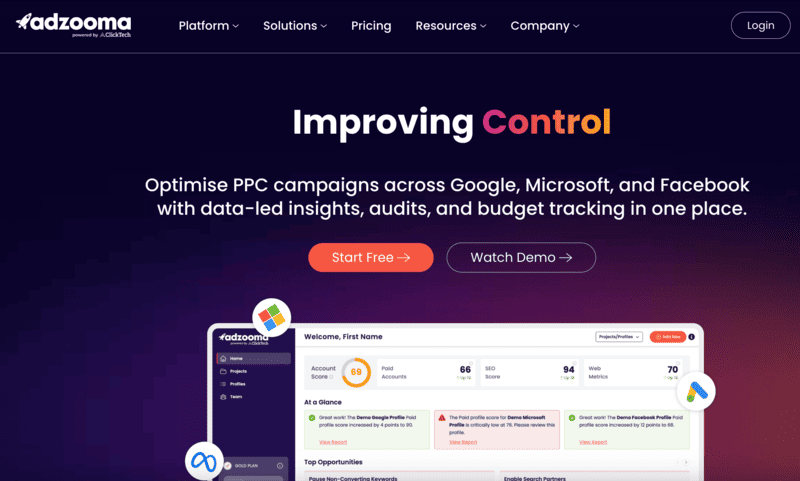
Adzooma manages Google, Microsoft, and Meta Ads from one dashboard, with a free tier that includes performance reports, an opportunity engine that scans your account daily, and basic budget tracking — no cost to start.
Best For: Small businesses and freelancers who want simple cross-platform PPC monitoring without a big budget or deep PPC expertise.
6. WordStream – Best for Google Ads Performance Grading
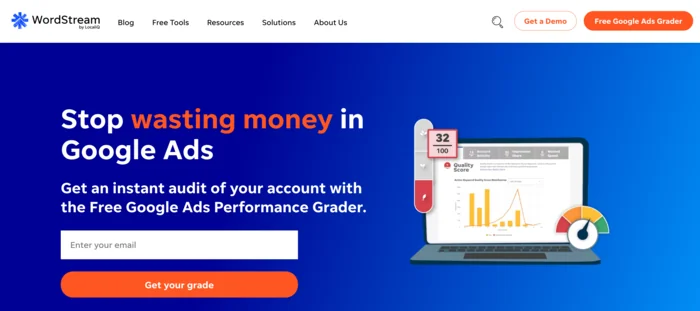
WordStream's well-known Google Ads Performance Grader gives a free account health check, and its paid tiers (from around $49/month) add one-click bid and keyword optimizations across Google, Microsoft, and Meta Ads.
Best For: Advertisers who want a guided, recommendation-driven approach rather than fully autonomous automation.
7. Optmyzr – Best for Advanced Google Ads Rule-Based Automation
Optmyzr provides rule-based automations for bids and budgets, one-click optimizations, and custom scripts for advanced Google Ads management. Entry pricing starts around $249/month for accounts spending up to $10,000/month.
Best For: PPC specialists and agencies managing complex, high-spend Google Ads accounts who want deep customization.
Category: AI Ad Creative & Video
AI ad creative generation is the process of using artificial intelligence to automatically create ad visuals, videos, and copy variations for testing and deployment in digital campaigns. Basically, these tools are your new creative assistants.
8. AdCreative.ai – Best for Rapid Static Creative Generation
If you need a firehose of ad creatives for testing, AdCreative.ai is your tool. It's incredibly fast and focuses on one thing: generating hundreds of static ad variations from your product images and copy. It claims to produce creatives with conversion rates significantly higher than those designed by humans. It's a key part of any modern ad tech platform for creative optimization.
Best For: Performance marketers and agencies who need to generate a massive volume of static ad creatives for A/B testing on social and display networks.
9. Pencil – Best for AI-Generated Video Ads
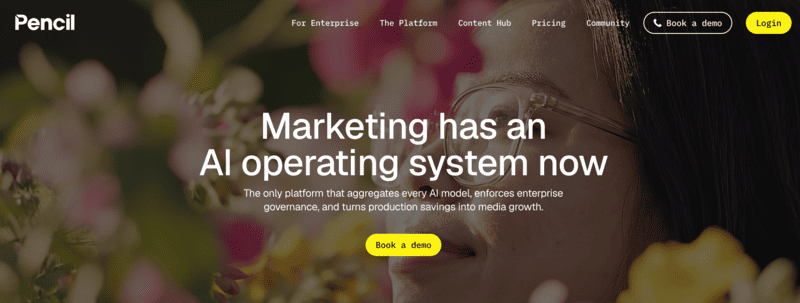
Pencil connects to your ad account and brand assets, then uses AI to generate new short-form video ads predicted to perform well. It's brilliant for turning existing assets—like product shots and past ads—into fresh video content for Reels and TikTok, helping you fight creative burnout without needing a video editor.
Best For: Brands heavily focused on short-form video (Reels, TikTok) that want to quickly repurpose existing assets into new, performance-driven video ads.
10. Creatify – Best for Turning Product URLs into Video Ads
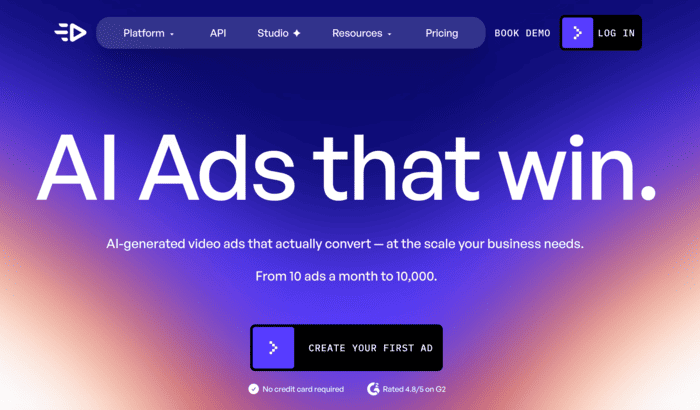
Creatify has a neat trick up its sleeve: just give it a product URL, and it will crawl the page for images and text to generate a video ad in seconds. It's a fantastic tool for e-commerce brands that need to create video ads at scale for their entire product catalog.
Best For: E-commerce stores with large product catalogs that need a super-fast way to generate simple video ads for prospecting or retargeting.
11. Celtra – Best for AI-Powered Creative Production at Scale
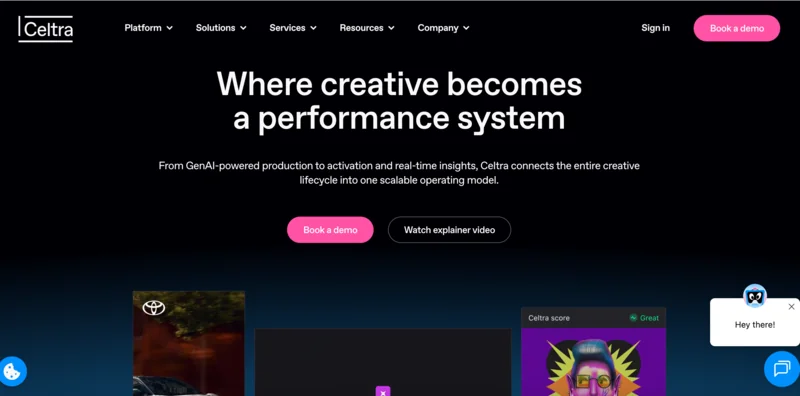
Celtra's Creative Automation platform auto-crops and auto-resizes assets across ad formats, and its AI Creative Lookup analyzes past ad performance to recommend which visuals and messages are likely to work best — distributing directly to 100+ media platforms.
Best For: Brand and creative teams that need to produce and adapt hundreds of ad variations without a production bottleneck.
Category: AI Ad Copy & Content
According to a recent survey cited by Averi AI, 87% of marketers are already using AI to help create content. These tools are leading the charge.
12. Jasper.ai – Best for High-Volume Marketing Copy
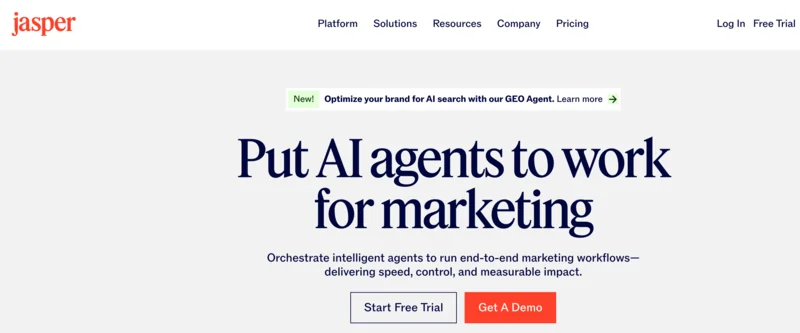
You've probably heard of this one. Jasper (formerly Jarvis) is one of the original and most powerful AI copywriters on the market. It can write everything from Facebook ad headlines to entire blog posts. With its "Brand Voice" feature, you can teach it to write in your specific style. It's a must-have for marketing teams that need to produce a ton of high-quality content.
Best For: Marketing teams and content creators who need to generate a high volume of copy for ads, emails, social media, and blogs.
13. Copy.ai – Best for Sales & Marketing Team Workflows
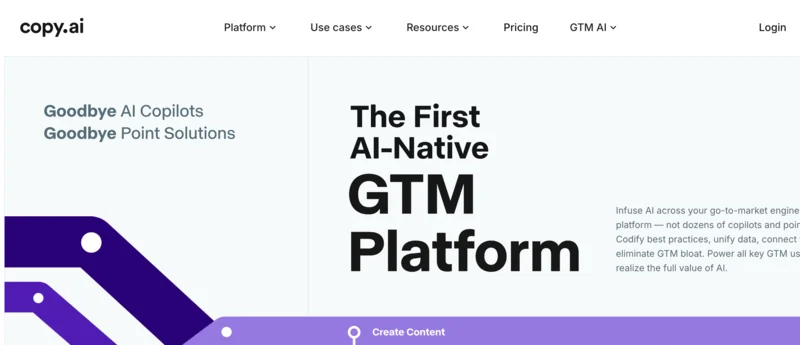
Copy.ai shines with its focus on workflows for sales and marketing teams. It has over 90 tools and templates designed to automate common tasks like writing outreach emails, generating social media posts, and brainstorming ad concepts. Its free plan is also one of the most generous available, making it a great starting point for anyone new to AI.
Best For: Sales and marketing teams looking to automate repetitive writing tasks and streamline their content creation process.
14. Writer – Best for Enterprise-Grade Generative AI
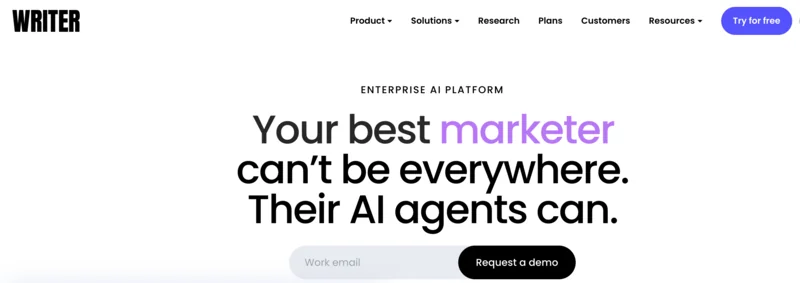
Writer is a full-stack generative AI platform built for the enterprise. It's highly secure and allows you to train the AI on your own data and brand guidelines to ensure everything it produces is on-brand and factually accurate. It's less of a point solution and more of a central AI brain for your entire organization.
Best For: Large enterprises that need a secure, customizable, and scalable generative AI platform that can be used across marketing, support, and product teams.
15. Surfer SEO – Best for SEO-Driven Content Teams
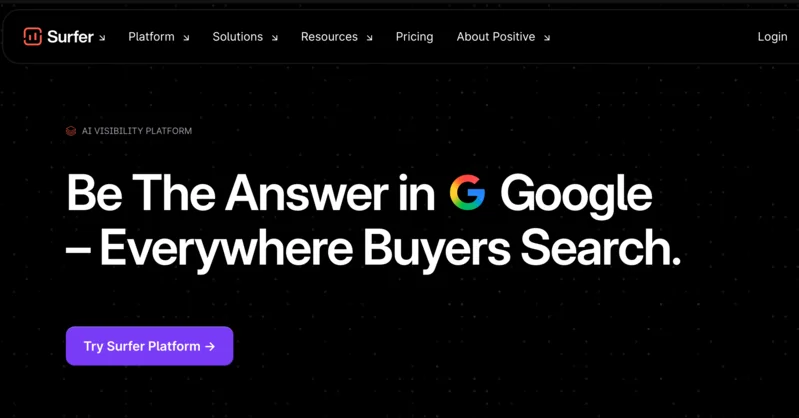
While not strictly an "ad" platform, Surfer is essential for anyone whose advertising strategy includes content marketing and SEO. It analyzes top-ranking pages for your target keyword and gives you a data-driven outline to help you write content designed to rank on Google.
Pro Tip: Worried Google will penalize you for using AI? Don't be. A study cited by Averi AI found there is no correlation between AI content percentage and search ranking. Focus on creating helpful, high-quality content, whether a human or AI writes it.
Best For: SEOs and content marketing teams who want a data-driven process for creating blog content that ranks on Google.
16. Anyword – Best for Performance-Driven Ad Copy
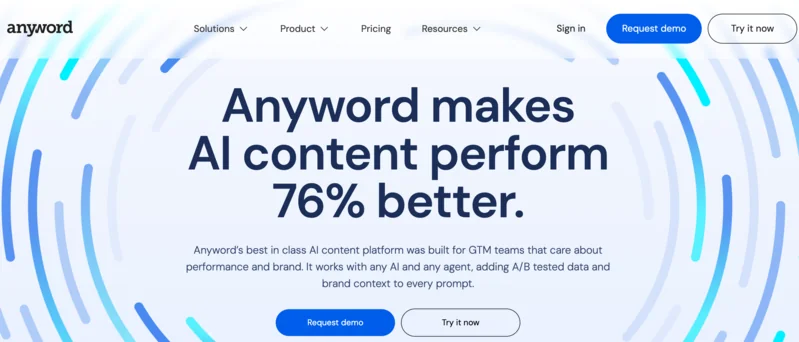
Anyword is built for performance marketers. It doesn't just generate ad copy; it gives each variation a "Predictive Performance Score," estimating how well it will convert for a specific audience. It's like getting to see the future of your ad copy before you spend a dollar on it.
Best For: Performance marketers and media buyers who want to use AI to write and pre-test ad copy for maximum conversion potential.
17. Semrush – Best for All-in-One SEO & PPC
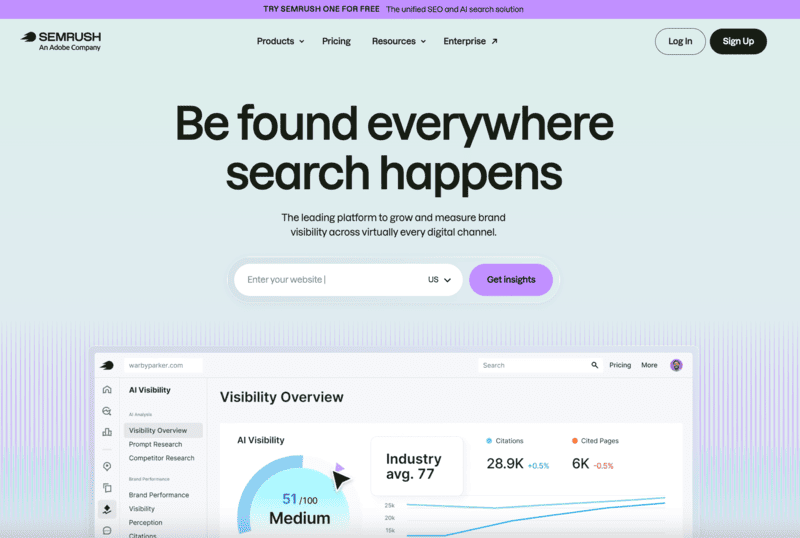
Semrush is the Swiss Army knife for digital marketers. While its core is SEO and competitor analysis, its AI-powered tools for PPC keyword research, ad copy generation, and campaign planning are incredibly powerful.
Best For: Digital marketing teams that manage both SEO and PPC and need a single source of truth for competitive intelligence and keyword research.
Category: Social Media Management & Analytics
18. Sprout Social – Best for All-in-One Social Media Management
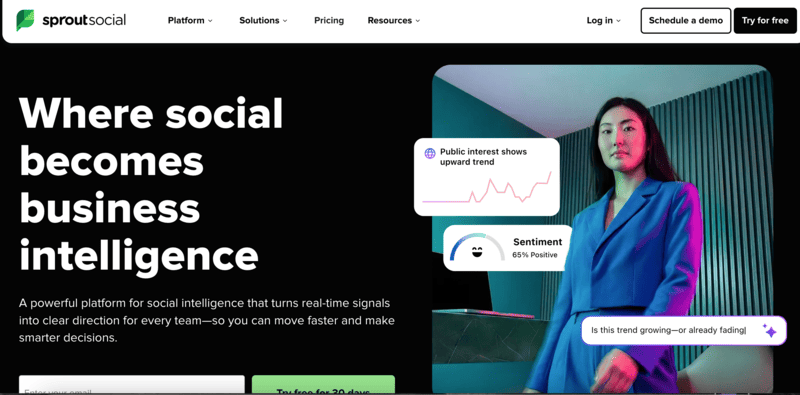
Sprout Social is a beast of a platform that combines social media scheduling, monitoring, and analytics. Its AI tools help you find the optimal times to post, analyze sentiment in comments, and generate reports that prove your social media ROI. It's a serious tool for serious businesses, processing millions of social messages daily, according to the company.
Best For: Mid-to-large businesses that need a robust, all-in-one platform to manage their entire social media presence across multiple channels and teams.
19. Hootsuite – Best for Managing Numerous Social Profiles
Hootsuite is one of the OGs of social media management, and it's still a powerhouse. Its strength lies in its ability to manage a huge number of social profiles from a single dashboard. Its AI, "OwlyWriter," helps you generate post ideas, captions, and hashtags instantly.
Best For: Agencies and social media managers who are responsible for managing a large portfolio of social media accounts.
20. Brand24 – Best for Social Listening & Reputation Management
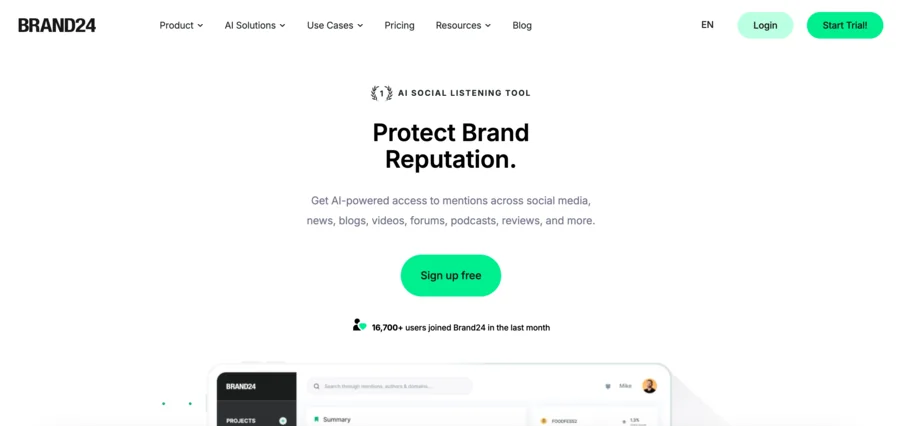
Brand24 is like having ears all over the internet. It uses AI to monitor mentions of your brand, products, and competitors across social media, news sites, blogs, and forums. Its sentiment analysis instantly tells you if the buzz is positive or negative.
Best For: Brands of all sizes that are serious about monitoring their online reputation, tracking competitor activity, and understanding customer sentiment.
Category: Programmatic & Enterprise Advertising
21. Smartly.io – Best for Enterprise Cross-Channel Creative Automation
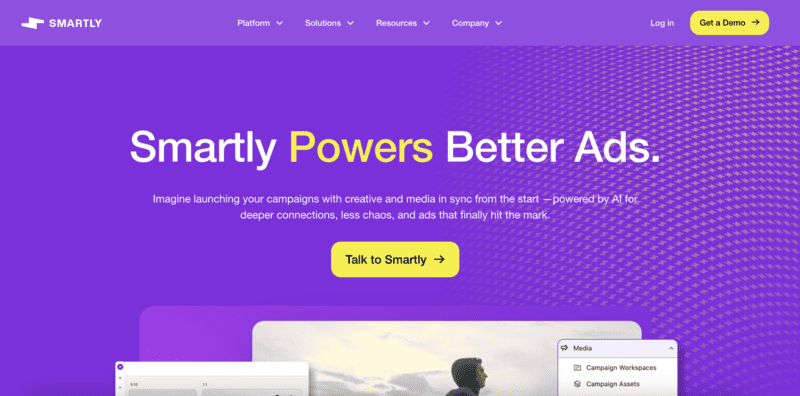
Smartly.io is built for advertisers spending $50K+ per month across Meta, TikTok, Pinterest, Snapchat, and Connected TV. Its AI Studio has generated 1.9 million creative assets across 260+ customers, cutting creative production time by 30x with an average 27% performance lift over static creatives. Pricing is custom enterprise, typically 2–4% of managed spend with a $4,000–$5,000/month minimum.
Best For: Large enterprise advertisers running high-volume, multi-channel creative programs who need production speed at scale, not just optimization.
22. Skai – Best for Omnichannel Commerce Media Management
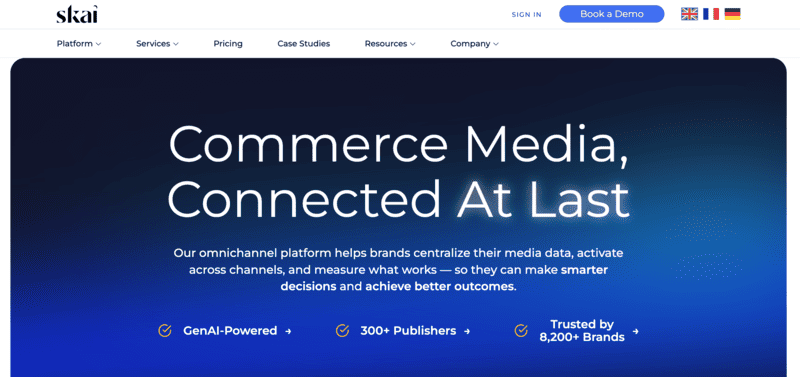
Skai (formerly Kenshoo) manages campaigns across 100+ publishers and retailers from a single login, with its Celeste AI surfacing proactive insights and automating daily bid and budget optimization.
Best For: Enterprise retail and commerce brands managing complex, multi-publisher ad programs who need unified cross-channel attribution.
23. StackAdapt – Best for AI-Driven Programmatic Advertising
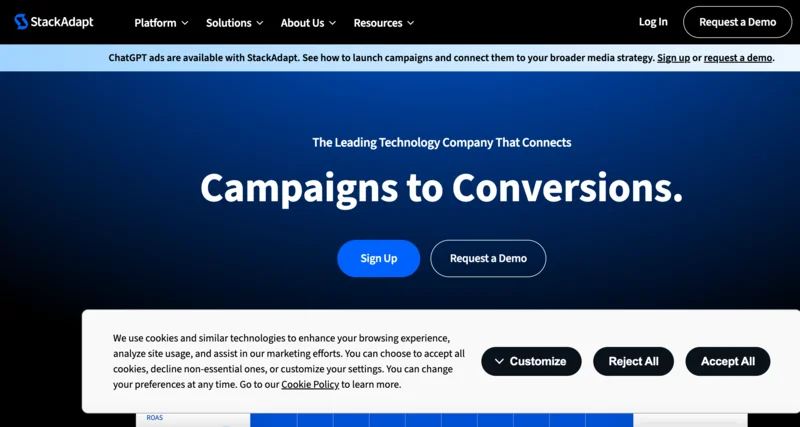
StackAdapt is built from the ground up on machine learning, using Auto-bid and Auto-budget features to redistribute spend to top-performing channels automatically, plus an AI Creative Predictor that scores which ad creatives are likely to perform best before you spend on testing them.
Best For: Marketers who want programmatic reach (native, display, CTV, audio, DOOH) combined with first-party data activation in one platform.
24. AdRoll – Best for Budget-Friendly AI Retargeting
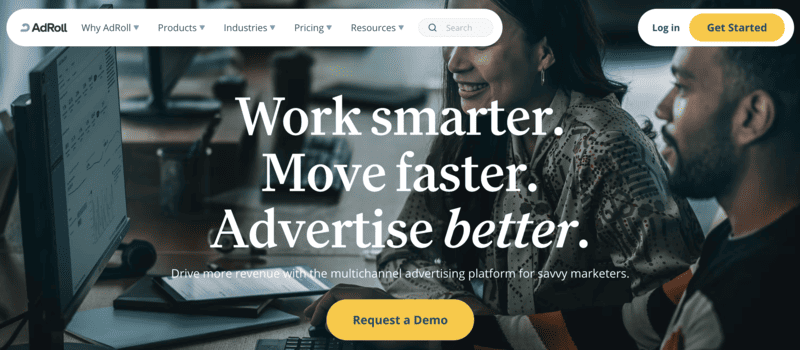
AdRoll uses machine learning to automatically refine ad placements and bidding, and segments audiences using different types of intent signals for dynamic retargeting across display, Meta, TikTok, and Pinterest. Pricing starts at $9/month self-service, or from $300/month for managed service.
Best For: Small and mid-sized e-commerce brands that want affordable, automated retargeting without an enterprise budget.
25. Quantcast – Best for Cookieless Programmatic Advertising
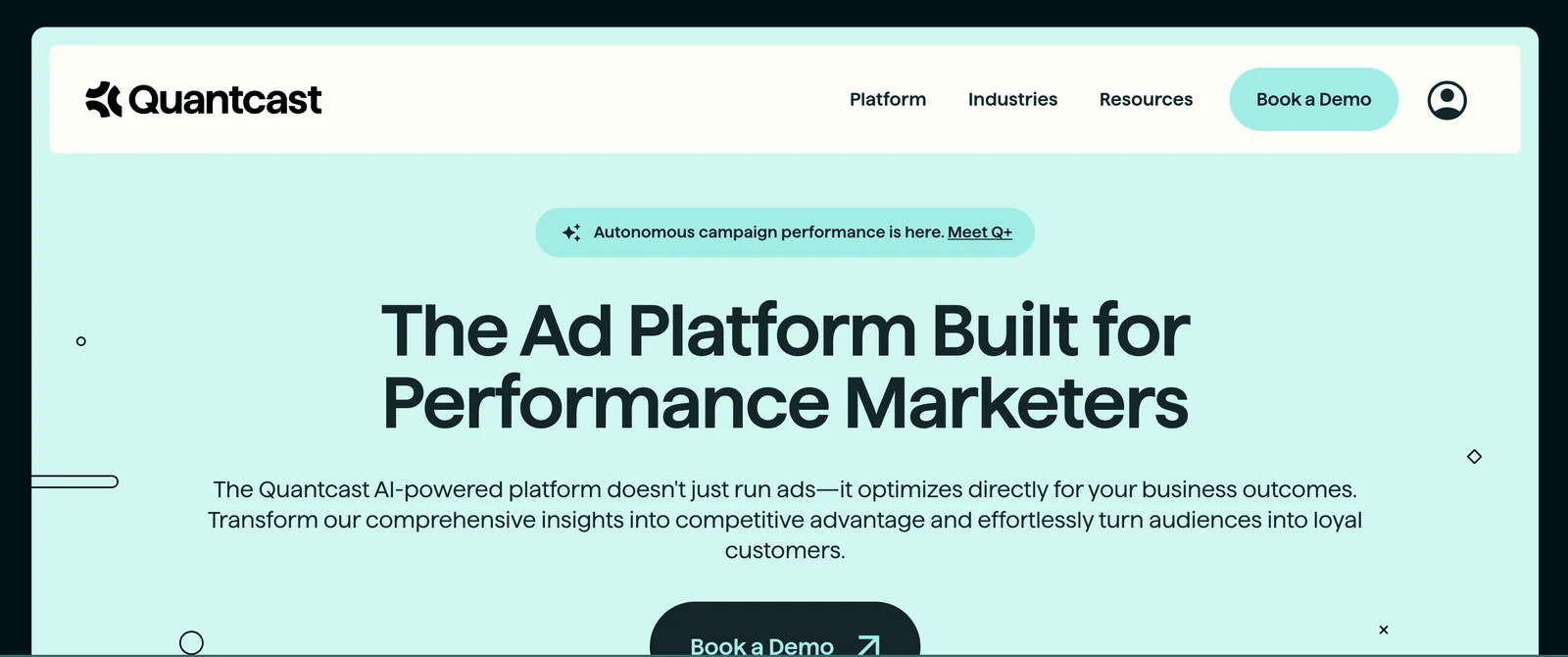
Quantcast's Q Suite (Agent Q, Analysis by Q, Audience by Q, Creative by Q) uses AI to surface opportunities, identify optimal audiences in real time, and score creative across five performance categories — built to perform in both cookie-based and cookieless environments.
Best For: Advertisers preparing for a cookieless future who want AI-driven audience targeting across display, video, CTV, and DOOH.
AI Platform Pricing: What to Expect
Wondering what your budget should be? Here's the deal: pricing can be all over the place, but it generally falls into these tiers — from free (Adzooma) to enterprise custom pricing with $4,000+/month minimums (Smartly.io, Skai).
How to Choose the Right AI Advertising Platform for Your Business
Ready to pick one? Don't just go with the first one on the list. Use this simple framework to make the right choice for your business.
- Define Your Primary Goal. What's the biggest problem you're trying to solve? Are you trying to save time (automation), improve performance (optimization), or scale creative production? For example, if you're struggling with campaign performance, you need a tool focused on real-time optimization.
- Assess Your Core Channels. Where do you spend most of your ad budget? If you're all-in on Meta, choose a tool with deep Facebook and Instagram integration like Madgicx. If your focus is Google Search, a tool like Surfer or Semrush is a better fit.
- Evaluate Your Team's Capacity. Do you need a highly automated "done for you" tool (like Albert.ai) or a "do it with you" co-pilot that provides insights and lets you make the final call (like Madgicx or Jasper)?
- Calculate Total Cost of Ownership (TCO). Look beyond the monthly subscription fee. Factor in the time it will take your team to learn and implement the tool, plus the potential savings from reduced ad spend.
Pro Tip: Don't just watch demos—use the free trial. The best way to test an AI platform is with your own data.
ROI Measurement Framework for AI Advertising Platforms
Most marketers using AI tools aren't actually measuring ROI correctly, which leads to the wrong platform choice and wasted spend. Here's how to do it properly.
Baseline Metrics to Track Before Implementation
Before implementing any AI advertising platform, establish a clear performance baseline so you can accurately measure whether the tool is delivering real business value. Without benchmark data, it's impossible to tell whether improvements are the result of the platform itself, seasonal demand, creative changes, or other external factors. Document your current metrics over at least the previous 30 days, and use the same attribution model throughout your evaluation period to ensure fair comparisons.
Financial Metrics: Track your current cost per acquisition (CPA) by advertising channel, return on ad spend (ROAS) by campaign type, customer lifetime value (CLV) by acquisition source, monthly ad spend, revenue attribution, average order value (AOV), and overall marketing efficiency ratio (MER). These metrics reveal whether the platform is improving profitability rather than simply increasing traffic or conversions.
Operational Metrics: Measure how much time your team spends on manual campaign optimization each week, campaign creation and management, reporting, creative production, bid adjustments, and A/B testing. Also record the number of creative assets produced each month and how quickly campaigns move from concept to launch. AI platforms often deliver just as much value through productivity gains as through performance improvements.
Performance Metrics: Monitor click-through rates (CTR) by platform and audience, conversion rates by traffic source, customer acquisition cost (CAC), impression share, cost per click (CPC), engagement metrics, and conversion volume. Reviewing these trends before implementation makes it easier to identify where AI is having the greatest impact, whether that's improving targeting, increasing creative effectiveness, or optimizing bidding strategies.
AI Advertising Platform ROI Calculation Formula
Use this framework to calculate your actual ROI from an AI advertising platform:
ROI = (Performance Improvement Value + Time Savings Value − Platform Cost) / Platform Cost × 100
- Performance Improvement Value: increased revenue from better ROAS, reduced wasted spend from better targeting, higher conversion rates from optimized creatives.
- Time Savings Value: hours saved × your (or your team's) hourly rate, plus the opportunity cost of time redirected to strategic work.
- Platform Cost: monthly subscription fees, setup/training time investment, integration and maintenance costs.
Pro Tip: Most businesses underestimate the time savings value. If you're spending 10 hours per week on manual optimization and your time is worth $50/hour, that's $2,000/month in opportunity cost most ROI calculations miss.
90-Day Implementation Timeline
Days 1–30: Foundation Phase
- Establish baseline metrics across all current advertising channels.
- Implement tracking and attribution systems.
- Choose and set up your primary AI advertising platform.
- Begin with conservative automation settings.
Days 31–60: Optimization Phase
- Analyze initial performance data and adjust settings.
- Expand AI automation based on early results.
- A/B test AI-generated creatives against manual ones.
- Refine targeting and bidding strategies.
Days 61–90: Scaling Phase
- Increase budget allocation to best-performing AI-optimized campaigns.
- Implement advanced features and automation rules.
- Calculate actual ROI and adjust your platform mix if needed.
- Plan for long-term scaling and additional platform integration.
Common Implementation Mistakes to Avoid
Mistake #1: Over-Automating Too Quickly
Many businesses turn on maximum automation immediately. This often backfires because the AI hasn't had time to learn your specific account patterns. It's worth understanding why: Meta, Google, and TikTok's own delivery algorithms each run their own "learning phase" per ad set (Meta's is widely documented at around 7 days), during which frequent edits — new creative, budget changes, audience tweaks — reset that learning process from scratch. Layering an AI advertising platform's automation on top of an algorithm that's still learning means you're compounding instability, not fixing it.
Solution: start with one or two automation rules (e.g., pause anything below a set ROAS threshold) rather than turning on full autonomous bidding across every campaign at once. Add more rules week by week as results stabilize. Most platforms need at least a weeks' worth of data to optimize effectively — resist the urge to intervene before then.
Mistake #2: Ignoring Creative Quality
AI can optimize targeting and bidding brilliantly, but it can't fix fundamentally poor creative. Many businesses expect AI to compensate for weak product photography or unclear messaging. Tools like AdCreative.ai or Celtra can generate dozens of variations in minutes — but if the underlying product photography or value proposition is weak, more variations just means testing more weak options, faster.
Solution: before turning on any creative-generation tool, audit your current top 3 performing ads and understand specifically why they work. AI variation tools amplify a strong base; they don't manufacture one from nothing.
Mistake #3: Not Setting Proper Conversion Tracking
AI platforms optimize based on the conversion data you feed them. Incomplete or inaccurate tracking means the AI optimizes for the wrong outcomes — and this problem has gotten worse, not better, since iOS privacy changes. If your pixel or conversion API isn't capturing full-funnel events (add-to-cart, initiate-checkout, purchase, post-purchase upsell), the AI is optimizing on partial signal, and will systematically favor cheap, low-intent conversions over your actual best customers.
Solution: implement comprehensive conversion tracking, including post-purchase events and real profit margins (not just revenue), before launching AI campaigns. Verify server-side tracking is active first — several platforms, including Madgicx, include it by default specifically to offset this exact problem.
Mistake #4: Comparing Platforms During Learning Periods
Most AI platforms have a 7–14 day learning period where performance is volatile. Comparing platforms during this window leads to premature decisions. A platform that looks worse in week 1 can outperform by week 4 — which is exactly why short 1-2 week "bake-off" tests between two AI platforms are notoriously unreliable, and often lead teams to cancel a tool that would have worked.
Solution: give each platform at least 30 days of consistent data, at the same budget level, before comparing performance. Focus on the trend line, not any single day's fluctuation.
Top 3 AI Advertising Trends for the Future
The pace of change is wild, and it's not slowing down. Here are three trends we're watching that will shape the future of AI advertising platforms — and they're not purely speculative; the early versions of each are already live in tools covered above.
- The Rise of AI Agents. We're moving beyond simple "co-pilots" and into the era of autonomous AI agents tasked with managing entire marketing functions with minimal human oversight. Quantcast's Agent Q is an early example already live today — proactively surfacing opportunities before a human would catch them, rather than waiting to be asked.
- Multimodal AI. The next generation of AI will be multimodal — a single prompt like "create a campaign for our new running shoe" generates the video ads, image ads, copy, audience segments, and launch plan together. We're not fully there yet, but the pieces are assembling fast: Smartly.io's AI Studio already generates creative at scale across formats, and Celtra's AI Creative Lookup already scores visuals and messaging together rather than treating them as separate problems.
- Predictive Budget Allocation. Today's AI mostly optimizes based on past results. Tomorrow's AI will shift budgets between platforms in real-time based on where it predicts the best performance will be, before the data even comes in. StackAdapt's live campaign modeling — which predicts impressions, reach, clicks, and conversions before a campaign fully spends — is a working preview of exactly this shift.
Frequently Asked Questions (FAQ)
1. How much do AI advertising tools cost?
Prices range widely, from free (Adzooma) or about $9-$30/month for single-feature tools to $4,000+/month for enterprise platforms like Smartly.io or Skai. A good business or pro plan typically falls in the $100–$499/mo range.
2. Can AI completely replace my marketing team?
No. AI is brilliant at automating repetitive, data-heavy tasks, but it can't replace human strategy, creativity, and brand intuition. The best results come from human-AI collaboration.
3. Which AI platform is best for a small e-commerce business?
For a small e-commerce business focused on Meta and/or TikTok ads, Madgicx offers a comprehensive, all-in-one solution combining creative generation with campaign optimization. If your primary need is just written content, Jasper.ai is a strong, affordable starting point.
4. What kind of ROI can I expect from an AI advertising platform?
Results vary based on business and strategy. Research compiled by Averi AI found companies using AI in their marketing reported a 22% higher ROI on average — but the real goal is meaningful gains in ROAS or CPA, not a universal number.
5. How long does it take to set up an AI advertising tool?
Setup varies. Simple creative tools like Jasper or AdCreative.ai can be running in minutes. Comprehensive ad tech platforms like Madgicx or Sprout Social require connecting ad accounts and data sources, usually 30–60 minutes, plus 7–14 days for the AI to gather enough data to optimize effectively.
6. What's the difference between a self-serve tool and an enterprise platform?
Self-serve tools (Madgicx, Jasper, AdCreative.ai, Adzooma) let you sign up and start immediately, usually with transparent monthly pricing. Enterprise platforms (Smartly.io, Skai) require a sales conversation, custom contracts, and typically a $4,000+/month minimum spend — built for teams managing $50K+ in monthly ad spend.
The Right AI Tool Is Your Advantage
Choosing the best AI advertising platform isn't about finding a magic button. It's about finding the right co-pilot that aligns with your goals, channels, and business model — which is exactly why we broke this guide into five categories instead of one flat ranking. The "best" platform on this list depends entirely on what you're actually trying to solve.
For e-commerce brands looking to win on social, an all-in-one platform like Madgicx that handles both creative and optimization can be a powerful option for scalable growth. For teams drowning in content creation, a tool like Jasper.ai can be a game-changer. If you're managing a $50K+/month budget across half a dozen channels, an enterprise platform like Smartly.io or Skai starts to justify its price tag in ways a self-serve tool never will. And if you're just starting out and need to prove ROI before asking for a bigger budget, free-tier options like Adzooma or AdRoll let you test AI-driven automation without the risk.
Whichever you choose, the platform is only half the equation. Use our ROI Measurement Framework above to actually track whether it's working, not just whether it feels like it's working — and revisit the Common Mistakes section before you flip on full automation, since the single biggest predictor of a bad first month isn't the tool you pick, it's how fast you turn on autonomous features before the AI has learned your account.
The bottom line? The advantage doesn't go to the marketer who avoids AI, but to the one who wields it best. Use our "How to Choose" framework to pick your top contender, give it the full 30 days our Mistakes section recommends before judging it, and sign up for a free trial to see how it performs on your own data.