Eight real finance ads seen running on Meta in November 2026, with why each works, what to copy, and the rules for financial products and services ads.
An effective finance ad on Meta makes one plain promise (a rate, a number of months, a card benefit), shows the product, and keeps the fine print small but present. Before the creative matters, the setup does: Meta treats financial products and services as a special ad category with its own rules on targeting, verification and what an ad may ask for.
Below are 8 real finance ads seen running on Meta on November 11, 2026, from American Express and Chime to Robinhood and Thrivent, with why each works and what you can copy. The rules section comes first, because a strong ad that gets rejected earns nothing.
See what makes winning ads win and when a creative starts to tire.
What makes finance ads a different creative problem
People decide whether to trust a money ad before they read it. Across the 8 ads, the same parts show up:
- A name or a plain promise. Either a brand people already know (American Express, Chime, Robinhood) or a benefit stated without jargon.
- One number. A rate (6.99% APR), a term (21 months of $0 intro interest), a fee ($0 annual fees) or a trading window (24/7).
- The product on screen. A card, a rate table, an app screen or a person using it.
- One button. Four of the 8 say Learn more; the rest say Apply now, Get quote or Download, and one video shows no button in the captured frame.
Five of the 8 are image ads and three are videos.
| Ad | Product | Format | Promise | Button |
|---|---|---|---|---|
| American Express | High yield savings account | Image | Reliability and service you expect | Learn more |
| Extra Card | Debit card that builds credit | Video | No interest, no credit check, reward points | None shown |
| Chime | Chime Card | Image | 0% interest and $0 annual fees | Apply now |
| LendingTree | Loan comparison | Image | Loan rates from 6.99% APR | Get quote |
| NerdWallet | Balance transfer cards | Image | $0 intro interest for 21 months | Learn more |
| Cleo | Credit builder card | Video | "Boost your credit" | Download |
| Robinhood | Crypto trading | Video | Trade 24/7 | Learn more |
| Thrivent | Retirement planning | Image | Plan now with an advisor | Learn more |
Meta's rules for financial products and services ads
This is a summary of Meta's published rules, not legal advice. Check your own ads with whoever handles compliance for your business.
Set the special ad category
- Meta's special ad categories page says that since January 21, 2025, the "Financial products and services" category is required for campaigns from advertisers based in the United States or showing ads to audiences in the United States. Ads may be rejected if the right category isn't chosen.
- It covers banking services, prepaid cards, investment services, pension or retirement funds, insurance products, consumer payment services, and 0% APR installment payments including buy now, pay later. Gift cards, store rewards, business-to-business-only products and tax and accounting services are not included.
- Choosing the category adds audience restrictions to the campaign, but it doesn't change how long review takes.
What the ad itself may and may not do
- Per Meta's financial and insurance products policy, ads for credit cards, loans or insurance must be targeted to people aged 18 or older.
- Ads can't directly request personally identifiable information or certain types of financial information.
- Advertisers must verify their business or individual identity, may need to show regulatory authorization, and may need a license in each country they target. Insurance, mortgages, loans, investment products and credit card applications are among the products that may require one.
- Ads can't promote payday loans, salary advances, bail bonds, short-term loans of 90 days or less, binary options, contracts for difference, initial coin offerings or penny auctions.
- For ads targeting the United States, investment products or opportunities can be promoted only by an accredited brokerage or a licensed financial advisor verified through Meta's financial services verification process.
The practical effect on creative: state the product and its conditions plainly, never ask for an account number or a Social Security number in the ad itself, and make sure the business behind the ad is the one Meta has verified.
Banking and savings ad examples
American Express: a trusted name and one plain promise
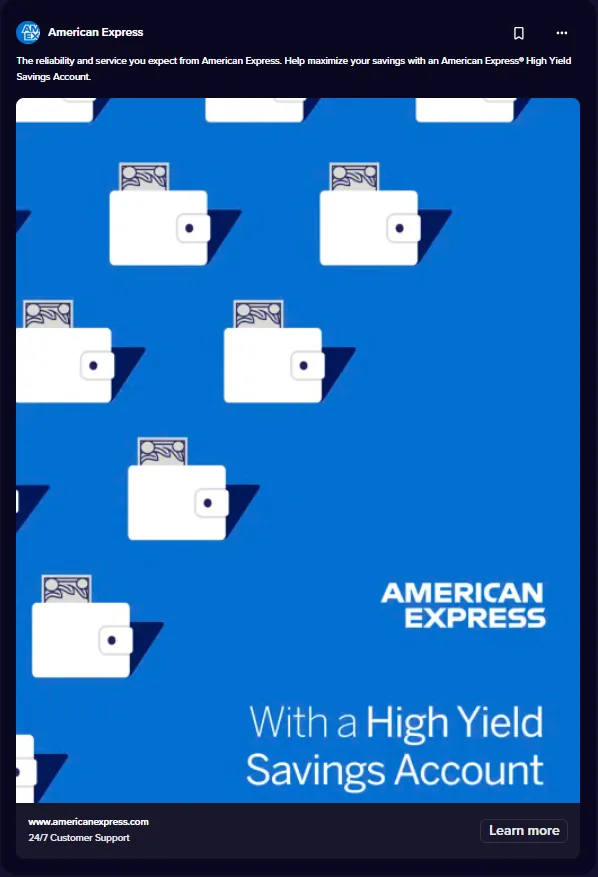
The first line reads: "The reliability and service you expect from American Express." It goes on to promote the American Express High Yield Savings Account, and the button is Learn more.
Why it works: the brand carries the trust, and the ad adds one promise (a high yield savings account) instead of a list of features.
What to copy: if your name is already known, lead with it and add a single product promise. If it isn't, replace the name with a proof point a stranger can check.
See American Express ads in the Meta Ad Library
Extra Card: open with the pain point
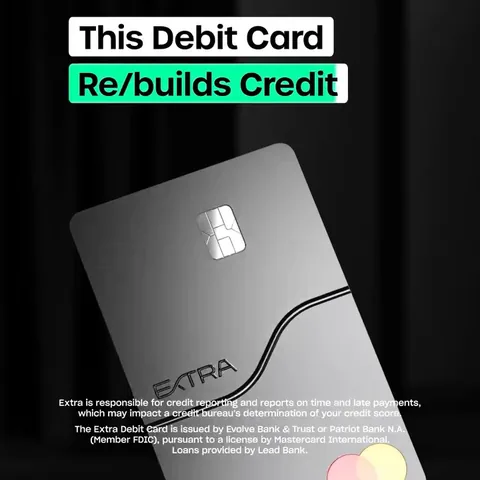
The first line reads: "With the Extra Debit Card, you can re/build credit and earn reward points on every purchase." The video opens on "Say NO to Interest Rates" and lists three benefits: no interest, no credit check and reward points on purchases.
Why it works: it starts with the problem the viewer already feels, then lists three plain benefits. The on-screen words make the point without sound.
What to copy: open with the pain point in the viewer's own words, then give three short benefits. Keep each benefit to a fact someone could verify on your site.
Lending, credit and fintech app examples
Chime: the benefit as the headline
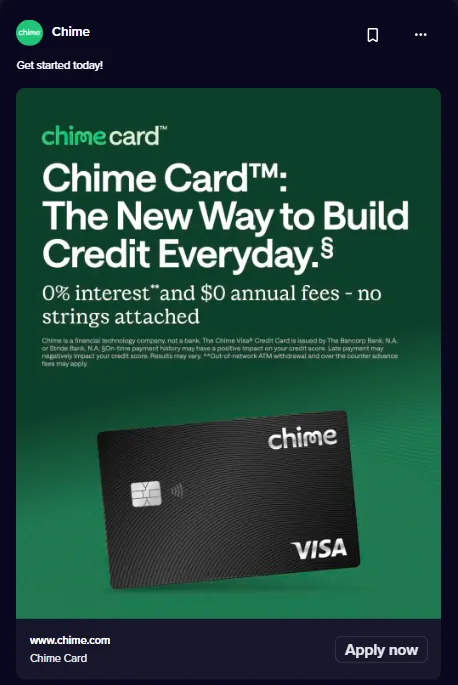
The first line is "Get started today!" The offer is 0% interest and $0 annual fees, the card is shown on the image, and the button is Apply now.
Why it works: two big numbers tell people the deal at a glance, the card is the hero of the image, and the fine print is kept small instead of left out.
What to copy: put the two numbers people care about in the image, show the real product, and keep the conditions in the ad (small, but readable).
LendingTree: show the real rates
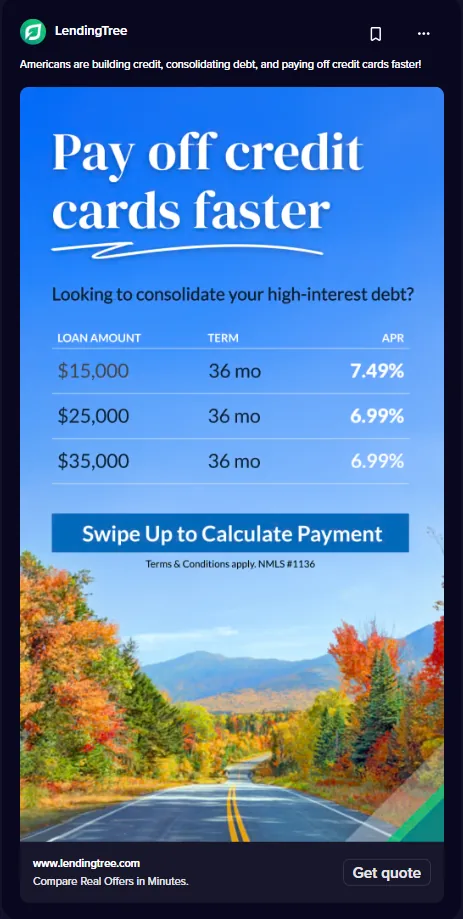
The first line reads: "Americans are building credit, consolidating debt, and paying off credit cards faster!" The image carries the headline "Compare Real Offers in Minutes." and a rate table, with loan rates from 6.99% APR. The button is Get quote.
Why it works: a rate table puts real numbers in front of the viewer before the click, and Get quote is the one obvious next step.
What to copy: if you compare or sell on price, show a small table of real figures in the creative. Say what the number is for (here, APR) so it isn't misread.
Browse LendingTree's current Meta ads
NerdWallet: a number the reader can feel
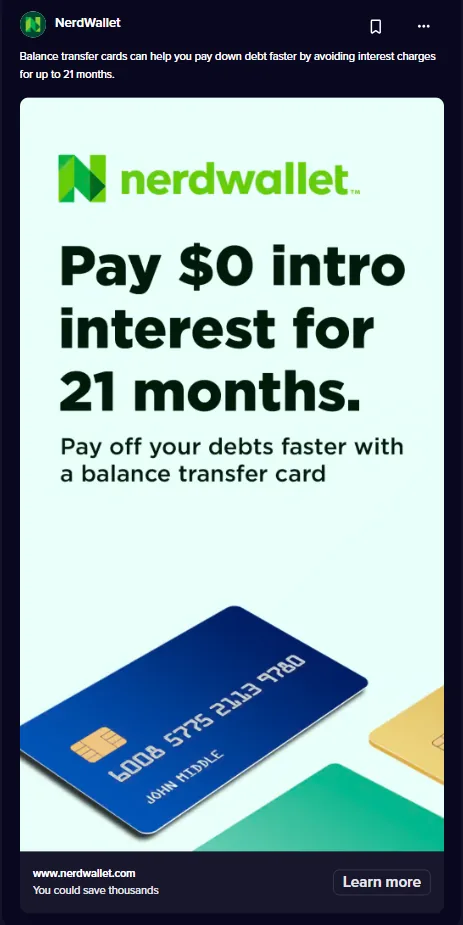
The first line reads: "Balance transfer cards can help you pay down debt faster by avoiding interest charges for up to 21 months." The headline is "You could save thousands", and the button is Learn more.
Why it works: the headline names the outcome, the first line explains the mechanism in one sentence, and "up to 21 months" gives the reader a concrete number. The card visual is simple, so the words do the work.
What to copy: pair an outcome headline with a one-sentence explanation of how it happens. Keep the qualifier ("up to") in the line, not only in the footer.
NerdWallet's ads in the Meta Ad Library
Cleo: a short text video for a credit builder card
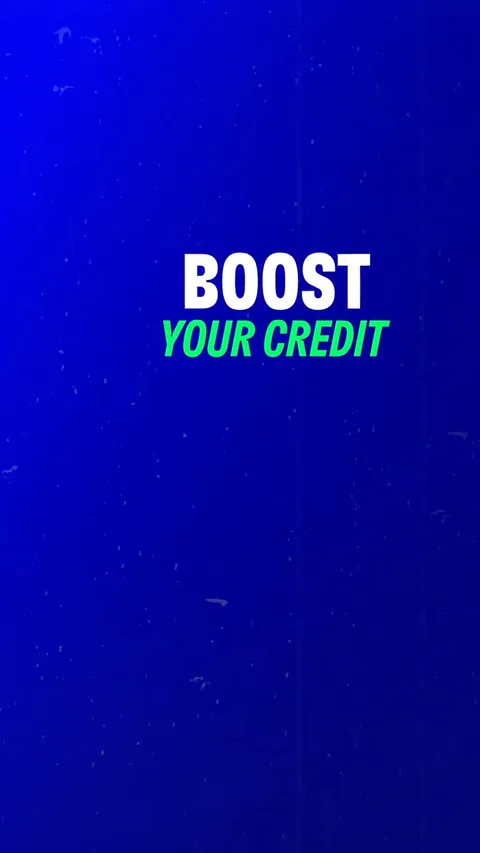
This one has no primary text in the capture. The headline is "Cleo's got your back", the video opens on the words "Boost your credit", and the button is Download.
Why it works: it's short and bold, and the words on screen carry the whole message, so it reads without sound.
What to copy: if your audience scrolls with the sound off, make the first two seconds a single sentence of text. Match the button to the action (Download for an app).
Investing and wealth ad examples
Investment ads face the tightest rules in this post: for ads targeting the United States, Meta limits investment products or opportunities to accredited brokerages and licensed financial advisors verified through its process.
Robinhood: a person on camera next to the app
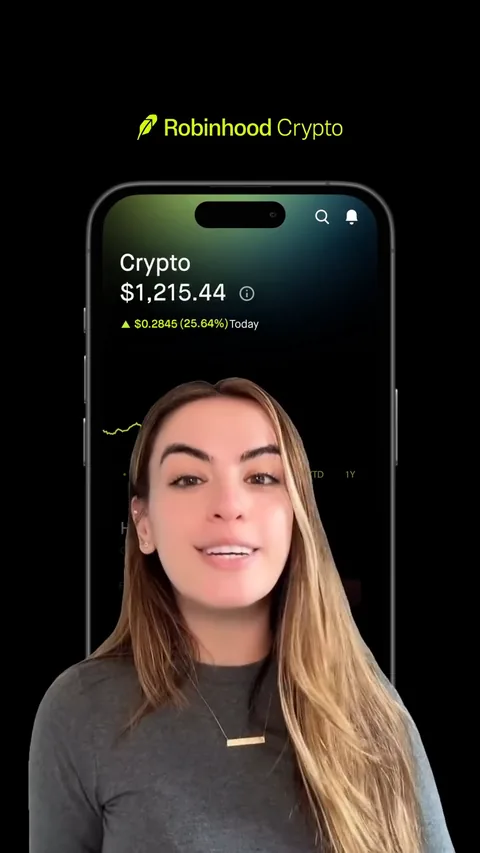
The first line reads: "Trade BTC, ETH, DOGE and more 24/7 with Robinhood Crypto." The headline is "Trade Crypto Today", and the button is Learn more.
Why it works: a creator on camera next to the app screen shows the product in use, and the first line says what you can do and when (24/7) in one sentence.
What to copy: show the product in use with a real person next to it, and name the specific actions it enables, not a general feeling.
Robinhood's active ads on Meta
Thrivent: speak to the age group directly

The first line reads: "Whether retirement is coming soon or years off, plan now to avoid outliving your savings. Our financial advisors can help." The headline is "Strengthen your retirement", and the button is Learn more.
Why it works: a warm portrait and a headline about retirement speak straight to the viewer's stage of life. The first line covers both people close to retirement and people years away, so more of the audience sees themselves in it.
What to copy: name the life stage in the headline, and make the next step a conversation ("our financial advisors can help") rather than a purchase.
Trust signals and disclosures to include
The examples show how finance advertisers build trust without a testimonial wall. A checklist you can apply to your own ads:
- Say who you are. Use the verified business name and Page.
- Pair every number with its condition. "0% interest" needs the period, "from 6.99% APR" needs "from", and "up to 21 months" needs "up to". Put the condition in the ad, not just on the landing page.
- Keep the fine print readable. Chime keeps it small, not hidden. If the legal line is unreadable at phone size, shorten the claim instead.
- Don't ask for sensitive details. Meta's policy prohibits ads that directly request personally identifiable information or certain financial information, so send people to a page or form instead.
- Match the targeting to the age rule. Credit cards, loans and insurance must be targeted to people 18 or older.
How to test finance creative and spot fatigue
Change one thing at a time: the promise, the headline number, or the format (image against short video). Run each version long enough to compare, and keep the audience and budget the same. Our guide to A/B testing examples shows how to set up clean comparisons, and ad copy examples covers the first-line patterns worth testing.
Finance offers move with rates and seasons, so an ad that worked in one quarter can tire quickly. Watch frequency and click-through rate together: when the first climbs and the second falls, it's time for a new angle, not a bigger budget.
Find what makes finance ads win with Madgicx
Creative Insights breaks down every creative, including video, to show what makes winning ads win, and flags creative fatigue so you know when to refresh. For a finance advertiser, that shows which promise, number or format holds up over weeks instead of days.
To build new variations, the AI Ad Generator makes image ads from a prompt, an image or any ad in the Meta Ad Library, ready to edit before you use them. Review every ad against the rules above before it goes live.
FAQ
Do I need a special ad category for finance ads on Meta?
Yes, if you're based in the United States or show ads to people in the United States. Since January 21, 2025, the "Financial products and services" category is required, and ads may be rejected without it.
What can't finance ads promote on Meta?
Meta's policy bars ads for payday loans, salary advances, bail bonds, short-term loans of 90 days or less, binary options, contracts for difference, initial coin offerings and penny auctions.
Who can run investment ads in the United States?
For ads targeting the United States, Meta allows investment products or opportunities only from an accredited brokerage or a licensed financial advisor verified through its financial services verification process.
What age can finance ads target?
Ads promoting credit cards, loans or insurance must be targeted to people aged 18 or older.
What should a finance ad include?
One plain promise with its conditions, the product on screen, the verified business name, and one button that matches the next step. Don't ask for personal or financial details in the ad itself.